Let’s talk about something that honestly doesn’t get enough attention in the money world: financial stability.
Not becoming a millionaire overnight. Not some dramatic “I retired at 32” story.
Just real, everyday stability.
You know… the kind where your bills are paid, your savings account is slowly growing, and checking your bank balance doesn’t feel like opening a horror movie.
Because the truth is most people aren’t trying to become wildly rich tomorrow. They just want to feel secure.
They want to know:
“Okay… if something unexpected happens, I’ll be okay.”
And the good news is financial stability isn’t something reserved for people with huge incomes. It’s something that gets built slowly through small habits and simple systems.
So today we’re going to walk through the habits that actually help build real financial stability. Even if your finances feel a little chaotic right now.
No judgment here. Just progress.
In This Post We’ll Cover:
- What financial stability actually means
- The habits that help you build it
- Simple tools that make money easier to manage
- Ways to reduce everyday spending stress
- Practical steps you can start with this week
What Financial Stability Actually Means
When people hear the phrase financial stability, they sometimes picture having tons of money.
But that’s not really what it means.
Financial stability is less about income and more about control and consistency.
It’s knowing your bills are covered. It’s having a little breathing room if something unexpected pops up. It’s not feeling like every small expense will completely derail your month.
For example, someone who is financially stable usually has:
- A clear system for managing their money
- A small emergency cushion
- Awareness of their spending
- A plan for future goals
Notice how none of those things require you to suddenly earn six figures.
Instead, they come from habits and systems that support your finances over time.
And the best part? Those habits can start small.
Habit #1: Actually Know Where Your Money Is Going
Okay, we have to start with the one people try to skip.
Awareness.
Because you can’t improve what you can’t see.
A lot of people feel like they’re “bad with money,” but the real issue is that they simply haven’t looked closely at their spending yet.
Money disappears quietly.
One food delivery here. A few subscriptions there. That random Amazon purchase at midnight.
So the first step toward financial stability is simply getting visibility.
That might mean:
- Reviewing your bank statements
- Writing down expenses
- Using a budgeting system
Some people also use tools like Credit Karma to monitor their credit and get a clearer view of their overall financial picture.
The goal here isn’t perfection. It’s awareness.
Because once you see where your money is going, you can start guiding it somewhere better.
Habit #2: Build a Simple Spending System
Now here’s where a lot of people get stuck.
They think financial stability means having superhuman discipline.
But honestly… discipline is unreliable.
Especially when you’re tired, stressed, or standing inside Target.
That’s why systems are better. A spending system simply means your money has structure.
For example:
- A checking account for everyday spending
- A separate place for savings
- Automatic transfers each month
Platforms like SoFi or Chime make this easier because you can create money into different accounts so you always know what’s available to spend.
This kind of setup removes a lot of the mental pressure.
Instead of constantly asking yourself, “Can I afford this?” your system already tells you. And honestly… that kind of clarity feels very peaceful.
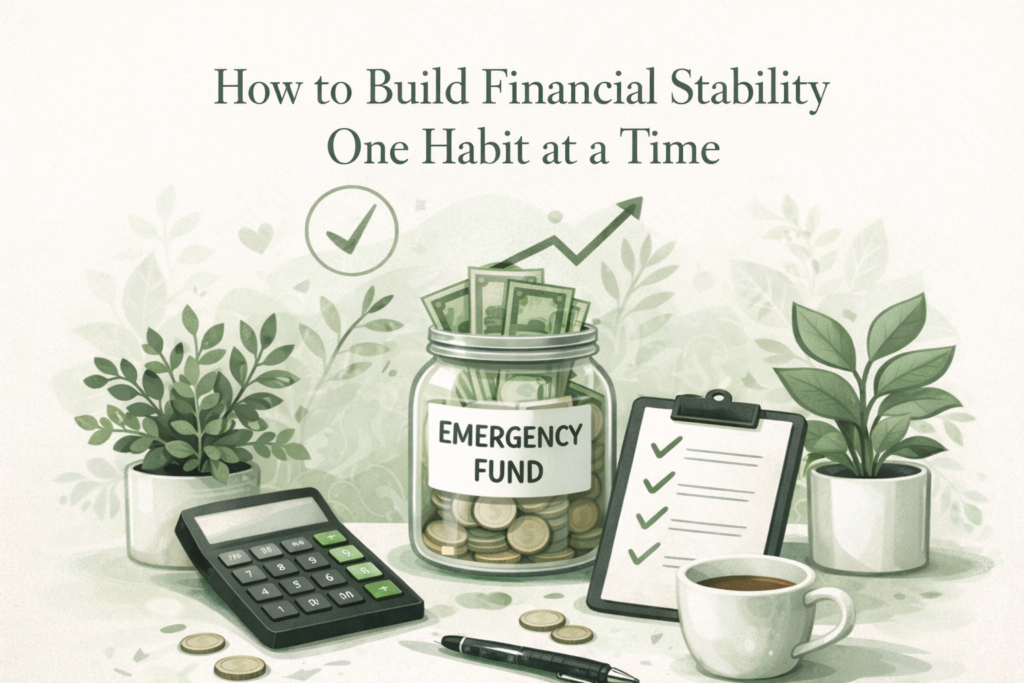
Habit #3: Start an Emergency Fund (Even a Small One)
If financial stability had a mascot, it would definitely be the emergency fund.
Because life is… unpredictable.
Cars break down. Appliances break. Medical bills appear like unwanted guests.
Without savings, those situations usually lead straight to debt. But the good news is your emergency fund doesn’t need to start huge.
Even $500 to $1,000 can dramatically reduce financial stress.
And one way people slowly build that cushion is by saving small amounts from everyday spending. For example, cashback tools can quietly return money from purchases you were already making.
Some popular ones include:
- Rakuten for online shopping cashback
- Capital One Shopping for automatic coupons
- Honey for discount codes during checkout
These tools won’t make you rich overnight, but they can reduce spending and help you redirect that extra money into savings.
And small wins matter.
Habit #4: Fix the Little Spending Leaks
Let’s talk about the sneaky part of finances.
The tiny spending leaks. You know the ones.
Subscriptions you forgot about. Impulse purchases. Convenience spending that slowly adds up.
Individually they felt harmless. But collectively they can quietly drain hundreds of dollars every month.
That’s why one powerful habit is simply identifying and reducing a few of those leaks.
Groceries are a great example.
Many people save small amounts each week using apps like Ibotta or Fetch Rewards, which give cashback or points for everyday purchases.
Again, the goal isn’t extreme couponing. It’s just being a little more intentional with the spending you already do.
Habit #5. Create Opportunities for Extra Income
While reducing expenses is important, increasing income can also play a role in financial stability. And today there are more options than ever.
For example, some people create digital products like planners, templates or guides.
Platforms like Payhip make it easy to sell digital downloads online without needing complicated tech setups.
Similarly, creative platforms like Creative Fabrica provide fonts, graphics, and design assets that creators use when building digital products. Using my link, you can currently get 10 FREE products when you sign up for a free trial. Plus, they have thousands of free downloads available on their free plan.
You can also use Canva to add these graphics/designs to so you can edit and create your own unique digital products.
Now this isn’t something you have to start tomorrow. But even small side income streams can provide extra financial breathing room over time.
Habit #6: Keep an Eye on Your Credit
Your credit score affects a lot of things.
Loans. Interest rates. Housing approvals. Refinancing.
That’s why regularly monitoring your credit health is another simple habit that supports financial stability.
Tools like Credit Karma allow you to track changes in your credit score and understand what factors are influencing it.
Again, this isn’t about obsessing over numbers.
It’s just about staying informed so you can make better financial decisions when the time comes.
Your Financial Stability Action Plan
If this all feels like a lot, don’t worry.
You don’t need to do everything at once.
Instead, start with a few small steps.
- Track your spending for one month
- Separate your savings from your spending account
- Start a small emergency fund
- Reduce one unnecessary expense
- Redirect that money toward savings
Financial stability is built through consistency, not perfection.
Remember: Stability Is Built Slowly
If your finances feel messy right now, you’re not alone.
Most people don’t learn about money systems until they’re already adults trying to figure things out. So give yourself some grace.
Financial stability isn’t something that appears overnight.
It grows gradually as your habits improve and your systems become clearer.
And the good news? Every small step you take today is helping your future self feel a little more secure.
Budgets In Bloom
Small Steps. Steady Growth.
Leave a Reply